YouTube tags are like hidden keywords associated with videos on YouTube. They aren't present on all videos because it's the responsibility of the video uploader to include them when they upload the video. To find these tags, there's a useful tool called the YouTube Tag Extractor , which helps reveal the meta tags of any public video. By extracting these tags, you can gain valuable insights into how competing videos and other popular ones are using these keywords to enhance their performance. Understanding this can be really insightful to improve your own video's reach and success.
You're right, tags are different from hashtags. Tags are hidden keywords associated with videos on YouTube, which help categorize and identify the content. They are not displayed in the video description or above the video title. Instead, they are used by YouTube's algorithm to understand the content of the video and recommend it to relevant viewers. Hashtags, on the other hand, are visible and are used to highlight specific topics or themes within the video. They are displayed in the video description and above the video title to help viewers find related content.
What are YouTube Tags? Understanding YouTube Tags and Hashtags
In the vast and dynamic world of YouTube, content creators are continuously seeking ways to optimize their videos and reach a broader audience. One of the essential elements in achieving this goal is the strategic use of YouTube tags and hashtags. In this article, we will explore what YouTube tags are, their significance in SEO (Search Engine Optimization), and how to leverage them effectively for channel growth.
Understanding YouTube Tags
What are YouTube Tags?
YouTube tags are descriptive keywords or phrases that creators associate with their videos. These tags help YouTube's search algorithm categorize and understand the content of the video better. By doing so, they increase the video's chances of appearing in relevant search results and suggested video sections.
The Purpose of YouTube Tags
The primary purpose of YouTube tags is to improve the discoverability of videos. When users search for specific topics, YouTube looks for relevant tags in videos to display the most suitable results. Tags, therefore, play a crucial role in connecting viewers with content that matches their interests.How to Add YouTube Tags
How to Add YouTube Tags
Adding tags to YouTube videos is a straightforward process. Creators can do this during the upload phase or afterward through the video's edit settings. It is recommended to include a mix of broad and specific tags related to the video's content to maximize visibility.
Importance of YouTube Tags for SEO
YouTube's Search Algorithm
YouTube's search algorithm uses various factors to rank videos, and tags are one of the significant contributors. When users search for videos, the algorithm considers the relevance and popularity of the tags to provide the most relevant results.
Improving Visibility with Tags
By using appropriate and relevant tags, creators can significantly improve their video's visibility. Tags allow videos to show up in the "Related Videos" section and as recommendations on viewers' homepages, increasing the likelihood of reaching a broader audience.
Using Specific and Relevant Tags
Specific and relevant tags are vital for optimizing videos effectively. Tags that precisely describe the content attract more engaged viewers, leading to higher watch times and overall engagement, which further boosts video rankings.
Best Practices for Using YouTube Tags
Researching Popular Tags
Creators should conduct research to identify popular and trending tags in their niche. Tools like YouTube's autocomplete and third-party tag generators can provide insights into what viewers are actively searching for.
Combining Different Types of Tags
Using a mix of general tags and specific tags is a smart strategy. General tags can attract a broader audience, while specific tags target a more niche audience interested in precise content.
Avoiding Misleading Tags
While it may be tempting to use popular tags that do not relate to the video's actual content, this can lead to a negative user experience. Creators should avoid misleading tags and focus on accurately representing their video's content.
YouTube Hashtags and Their Role
How YouTube Hashtags Work
Similar to social media platforms, YouTube allows the use of hashtags to categorize content. Hashtags help viewers find videos related to specific topics or events.
Benefits of Using Hashtags
Using hashtags can expand the reach of videos beyond the creator's subscriber base. When users search for or click on a hashtag, they can discover videos from various creators, potentially exposing a new audience to the content.
Choosing Effective Hashtags
Creators should choose hashtags that directly relate to the video's topic and are popular among their target audience. Researching trending hashtags and incorporating them into video descriptions can also enhance discoverability.
Leveraging Youtube Tags for Channel Growth
Increasing Organic Reach
Strategically using tags and hashtags can help increase a channel's organic reach. As videos appear in more search results and suggested sections, the channel gains visibility and attracts new subscribers.
Enhancing Video Discoverability
The right tags and hashtags can significantly impact a video's discoverability. When users find relevant content through these elements, they are more likely to watch multiple videos from the same channel, fostering viewer loyalty.
Analyzing the Impact of Tags on YouTube Analytics
Tracking Tag Performance
YouTube Analytics provides valuable insights into how tags affect a video's performance. Creators should monitor the metrics regularly to identify which tags are driving the most views, watch time, and engagement.
Understanding Audience Behavior
The performance of tags also sheds light on audience behavior. Creators can learn more about their viewers' interests and preferences, enabling them to create content that resonates better with the target audience.
YouTube Tag Mistakes to Avoid
Stuffing Tags Unnecessarily
Using an excessive number of tags, especially irrelevant ones, is known as "tag stuffing." This practice can be detrimental to a video's performance and may lead to disciplinary action from YouTube.
Using Irrelevant Tags
Tags must accurately reflect the video's content. Using tags that have no relevance to the video misleads viewers and damages the channel's credibility.
YouTube Tag Tools and Resources
YouTube's Built-in Tag Suggestions
YouTube itself offers tag suggestions based on the video's content. Creators can use these recommendations as a starting point and then add more relevant tags to optimize their videos further.
Third-Party Tag Generators
Several online tools provide youtube tag generation services. These tools can help creators find popular tags and explore tag variations to improve video discoverability. lets explore the youtube tags & description generator tool.
Extract YouTube Tags and Description Generator: A Free Online Tool
In the competitive world of YouTube, content creators are always on the lookout for ways to enhance their videos' discoverability and reach a wider audience. One essential aspect of optimizing YouTube videos is using relevant tags and compelling descriptions. However, manually coming up with tags and descriptions for each video can be time-consuming and tedious. This is where a YouTube Tags and Description Generator can be a game-changer.
What is a YouTube Tags and Description Generator?
A YouTube Tags and Description Generator is a free online tool designed to assist content creators in generating optimized tags and engaging descriptions for their YouTube videos. It utilizes algorithms and data analysis to provide users with relevant keywords and phrases that can improve the video's visibility and ranking on YouTube's search results.
How Does the YouTube Tags and Description Generator Work?
In the vast sea of online content, making your videos stand out on YouTube can be a challenging task. While creating high-quality videos is essential, optimizing them for search engines is equally crucial. YouTube Tags and Descriptions play a vital role in enhancing your video's discoverability, helping it reach a wider audience. To make this process more efficient, YouTube Tags and Description extractor have emerged, offering content creators a simple yet powerful solution
Importance of Using Tags and Descriptions
Properly utilizing tags and descriptions can significantly impact your video's visibility. They improve search engine optimization (SEO) and provide crucial information about your video to both viewers and YouTube's algorithm. When used effectively, tags and descriptions can increase the chances of your video being discovered by the right audience, resulting in more views and engagements.
How Does the YouTube Tags and Description Generator Work?
YouTube Tags and Description Generators simplify the process of optimizing videos by automatically suggesting relevant tags and descriptions based on the video's content. Here's how it works:
Step 1: Entering Video Title and Content
To begin, you need to enter your video's title and a brief summary of its content. The generator uses this information as a reference to understand the video's main theme and subject matter.
Step 2: Choosing Relevant Keywords
Once the generator understands the video's content, it suggests a list of relevant keywords and phrases commonly used by viewers to search for similar videos.
Step 3: Generating Tags and Descriptions
With the chosen keywords, the generator creates a set of tags and a compelling description that enhances the video's searchability and engages potential viewers.
Advantages of Using a YouTube Tags and Description Generator
1. Time-Saving: Manually researching and selecting appropriate tags and descriptions can be time-consuming. A generator automates this process, saving creators valuable time.
2. Enhanced SEO: By generating relevant tags and descriptions, the tool improves the video's SEO, leading to higher rankings and increased visibility.
3. Broad Audience Reach: Optimized tags and descriptions help attract a more targeted audience, increasing the chances of gaining subscribers and loyal viewers.
4. Improved Content Understanding: The generator's AI algorithms can understand the video's content and suggest the most suitable tags and descriptions for it.
One of the confusing aspects of YouTube is the presence of two types of tags:
- Tags: Indeed, the two types of tags on YouTube include the invisible "meta" tags associated with a video, and these are precisely what the Tag Extractor tool extracts.
- HashTags: The visible tags displayed above a video title are known as YouTube hashtags. If you want to learn more about YouTube hashtags, you can find additional information on the platform's official documentation or support resources.
Tags are added to a video after it's uploaded on YouTube. Unlike hashtags, they don't have pound (#) signs before them, and they can contain spaces to include multiple words in a string. The recommended practice is to use all lowercase tags with alphanumeric characters.
Since these Tags area unit invisible on the particular video page, our friends at SEOptimer munificently shared thusme screenshots with United States of America so we are able to peek behind the scenes at however they labelled their videos.
In YouTube Studio, at very cheap of the “Video details” page could be a link “Show More”:
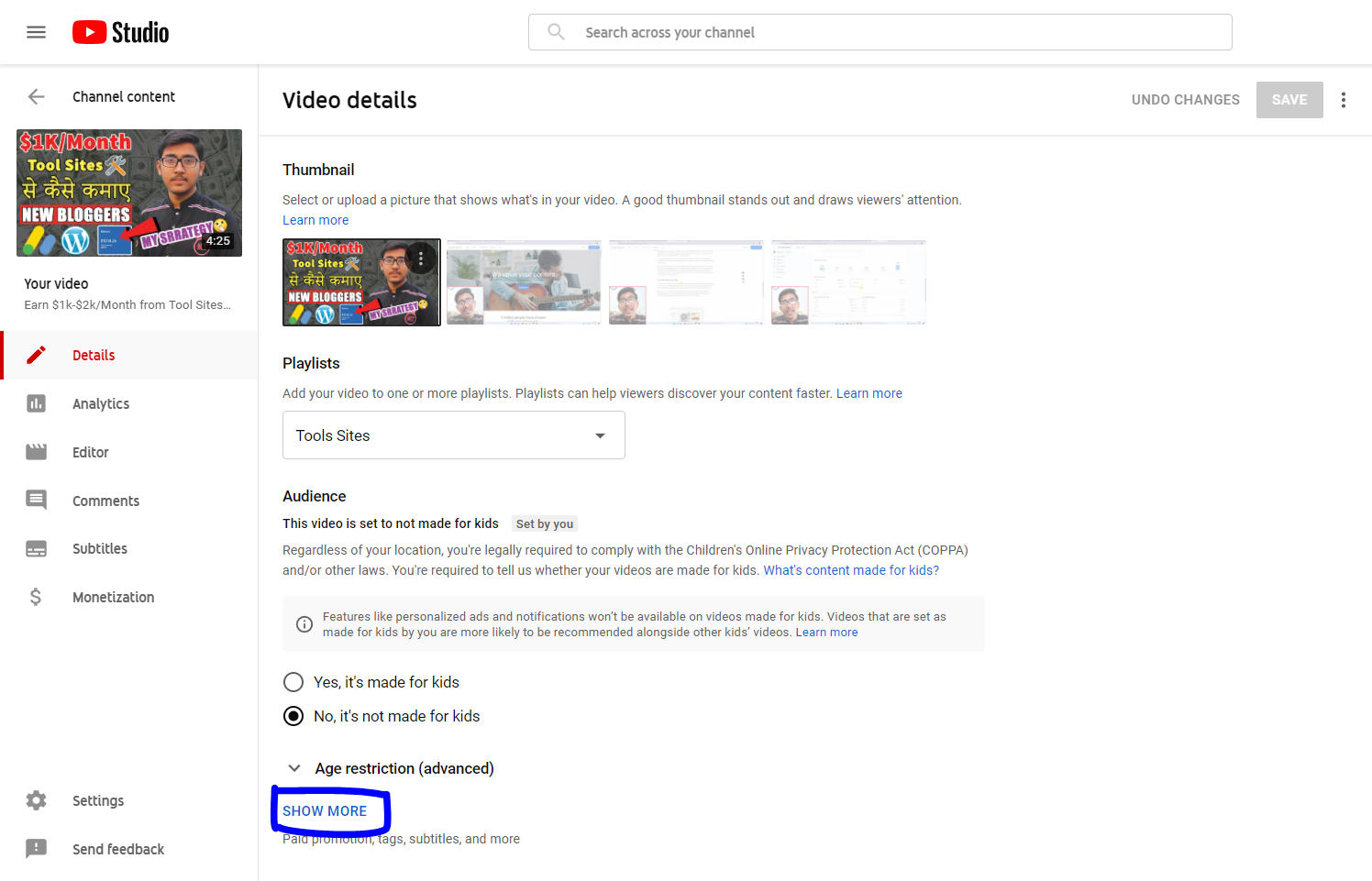
Once this is clicked, it's expands further options are including “Tags”:
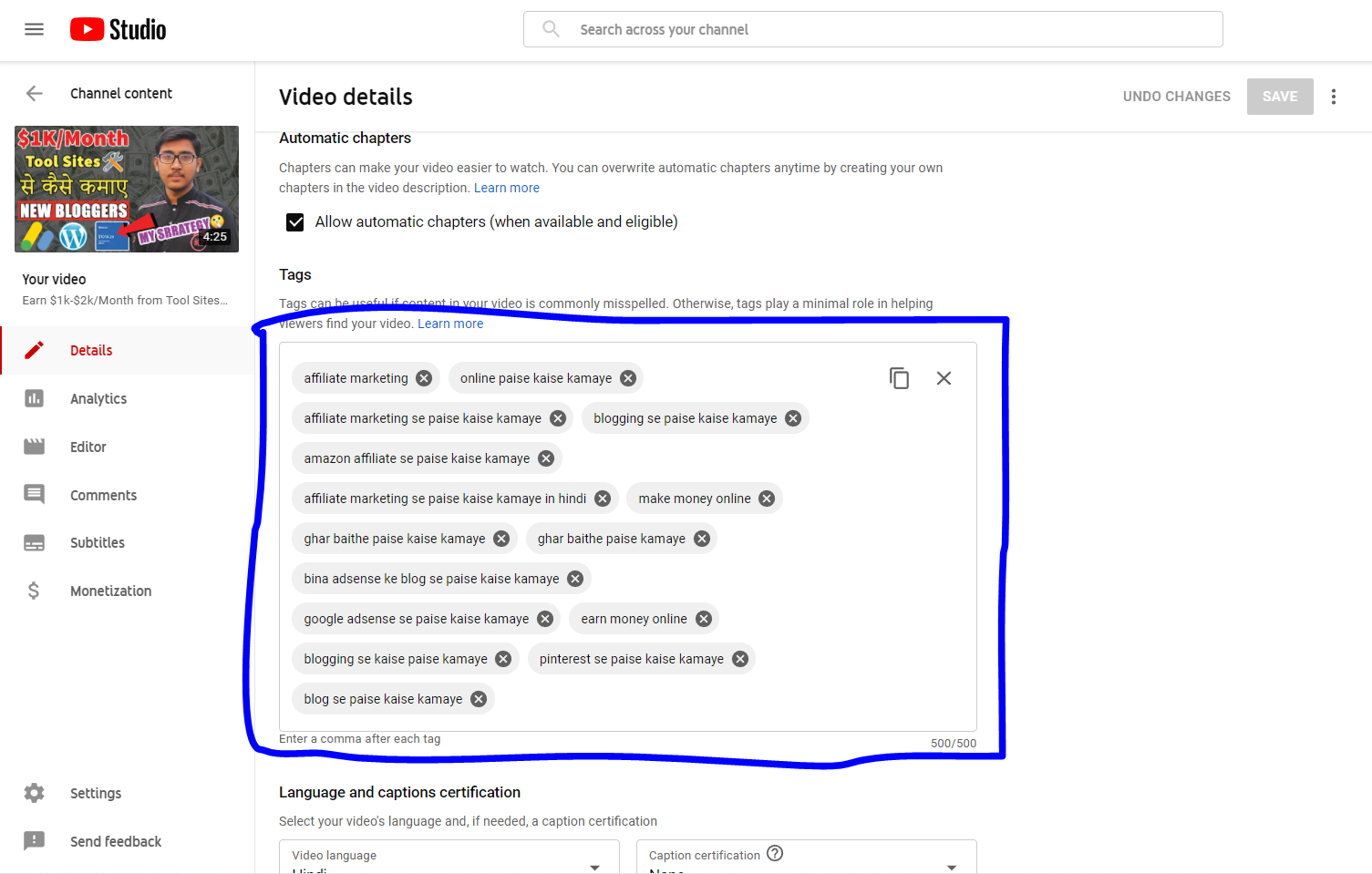
A YouTube video will have up to five hundred characters value of Tags - that may be a lot! In the instance on top of, we are able to see the SEOptimer video has 11 Tags. Altogether these Tags only take up 164 characters of the 500 limit, so there’s room for many more.
Now here comes the magic. Using the YouTube Tag Extractor, we can easily reveal these hidden meta tags with the click of a button:
You’ll notice, the Tags square measure significantly extracted in just an equivalent order that the author has used. this offers you a extremely nice insight concerning what the author thinks is (a) the foremost vital topics within the video and; (b) the best priority tags for video SEO.
Why square measure YouTube Tags important?
So currently we all know the YouTube Tag Extractor works like magic on any public YouTube video and extracts the invisible meta tags while maintaining the order of these Tags as denoted by the author of the video.
But why is that this important? You’re doubtless reading this page at the instant as a result of you’re inquisitive about the general topic of Video SEO. we all know from YouTube themselves that a lot of signals contribute to the general ranking within the search result page (title, description, hashtags, thumbnail, tags, quality of video, etc).
We suggest obtaining the fundamentals right and utilize all the options that YouTube offer to reason and apply intending to your videos. The jury may well be out on the degree of influence the hidden meta tags wear search result rankings, however our recommendation is usually to err on the facet of improvement and use all YouTube options along. After all, the additional YouTube understands what your video is concerning, the additional probability your videos can rank higher in YouTube search results.
YouTube Tags strategy
There square measure some strategic concerns once extracting Tags from contestant videos. There square measure 2 potential eventualities once extracting Tags from a YouTube video mistreatment this tool:
1. The video has no Tags: Indeed, it is quite common for the Tags field to be hidden behind the "Show More" text link at the bottom of the video details page in YouTube Studio. This means that unless your competitors are familiar with YouTube's features, they might overlook this section and upload their videos without any tags. This can work in your favor because any tags you add to your video will be more effective in enhancing its discoverability. To gain an advantage, observe the phrasing your competitors use in their video titles and descriptions. Also, check if they use any hashtags in the video description. By analyzing their approach, you can devise a better strategy for your own video's tags, title, and description, ultimately increasing the chances of your video reaching a broader audience and standing out amidst the competition.
2. The video has Tags: After identifying the Tags on the video, similar to the example provided by SEOptimer with its eleven Tags, the next step is to use your best judgment to assess their quality. Look for anything surprising or uncommon about the Tags and how they are ordered. In the mentioned SEOptimer example, the Tags follow a typical pattern starting with the brand term "seoptimer," then including broad category terms like "seo," and further expanding to incorporate sub-category or niche terms like "seo reporting." The order of these Tags provides valuable insights into how they approach their key terms. For direct competitors, it is advisable to use similar broad Tags to stay competitive. However, it's also beneficial to include some unique Tags that capture niche searches, where you might have a competitive advantage. By strategically selecting and organizing your Tags, you can optimize your video's visibility and relevance, thus increasing its chances of reaching a wider audience.
One of the significant advantages of Tags is that you can edit them even after you have published your videos. So, if you feel that some of your videos could perform better in search results or if your competitors are doing well with specific keywords, consider editing your Tags accordingly. Before finalizing your Tags, take into account the guidance provided by YouTube, which is located just above the Tags input box. This can help you optimize your video's discoverability and reach on the platform.